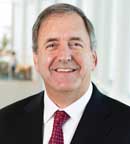




Over the past 3 decades, cataract surgery has undergone one of the most remarkable transformations in medicine, evolving from a procedure focused on restoring vision to one that delivers highly personalized refractive outcomes. Below, as part of Ophthalmology Management's 30th anniversary series celebrating ophthalmic innovation, Vance Thompson, MD, who founded Vance Thompson Vision in Sioux Falls, South Dakota, in 1991, reflects on the breakthroughs that redefined cataract surgery, the lessons learned along the way, and the technologies that have yet to fulfill their promise.
Ophthalmology Management: Over the past 30 years, how has cataract surgery evolved from a rehabilitative procedure into a refractive procedure?
Vance Thompson, MD: Thirty years ago, cataract surgery was primarily about restoring sight. We were grateful if the patient saw better with glasses and healed safely. Restoring reading range in combination with quality distance vision while preserving binocularity and stereopsis was mostly unheard of.
Today, cataract surgery is one of the most powerful refractive procedures we perform. We are not just removing a cloudy lens; we are designing a visual future. We measure the eye more precisely, treat astigmatism, optimize the ocular surface, document macular and optic nerve heath, and choose lens technology based on lifestyle, while aiming for a refractive target that fits the patient’s daily life and hopes and dreams. Cataract surgery has gone from “Can we help you see again?” to “How do you want to live visually?”
With this revolution in technology and evolution in our knowledge of how best to match technology to patients, we can now provide the same traditional approach of quality vision with glasses or restore both things the patient’s lens lost, reading range and clarity, and then treat residual refractive error with glasses, contact lenses, or, for those who want to see without optical devices change corneal power, through laser vision correction or changing implant power through optic adjustability. It is stunning what cataract surgery has evolved to, and it has been an honor to have a front row seat to watching it evolve, doing many of the US Food and Drug Administration (FDA) monitor trials to lead to the approval of these technologies and both teaching and learning about how best to use them to optimize patient joy.
OM: Which innovation has had the greatest impact on surgical precision and outcomes?
VT: If I had to choose one, I for sure say LASIK. There is simply no way to bring a patient joy without hitting the refractive endpoint at precise plano/zero correction or as close as possible. Unaddressed residual refractive error is something we treat after traditional cataract surgery with glasses fine-tuned as precise as possible to distance perfection, and we need to do the same with advanced cataract surgery, where patients are expecting to see crisply without glasses. But rather than glasses, we use LASIK to take the football in for the touchdown and take the advanced implant patient to plano or as close to it as possible.
Ray Tracing LASIK has made the most accurate procedure known to refractive surgery even more accurate now that it incorporates what we always wished we could incorporate in treatment planning: refraction, keratometry, wavefront, anterior corneal curvature, posterior corneal curvature, pachymetry, anterior-chamber depth, axial length, iris registration, and cyclotorsion control. Without LASIK, all refractive surgery would not be where it is today, and that includes treating advanced implant cataract surgery residual refractive error. As a matter of fact, refractive surgeons have used LASIK to treat patients not fully happy with photorefractive keratectomy, small incision lenticule extraction, phakic intraocular lenses (IOL), or pseudophakic IOL. LASIK is the most accurate surgical procedure there is, and it is so helpful to help meet or exceed patients' desires for no to minimal refractive error.
While the combination of optical biometry with modern IOL formulas has improved refractive accuracy, ophthalmologists still need to take care of residual refractive error due to healing-related variables, such as effective lens position (which, he notes, still involves a preoperative estimate).
Advanced optics IOLs, along with precise measurements and better calculations, have truly changed what was possible—including giving that patient 20/20 uncorrected distance and the reading range of someone in their 30s. But no matter how advanced the optics, you cannot deliver a refractive outcome without refractive accuracy, and that is where LASIK saves so many situations and brings patients ultimate joy.
The other major innovation is the understanding that the tear film is the first refracting surface of the eye: A great formula with bad measurements from an unhealthy ocular surface is still a bad plan. But what we also know is that the tear film, what I like to call the tear lens, is the most powerful focusing element of our eye. For premium vision, we need a premium tear lens, along with a clear natural lens or a quality new lens implant.
OM: What innovation most dramatically changed patient expectations?
VT: Premium IOLs and astigmatism management have changed expectations the most. Patients no longer think only about having the cataract removed. They think about reading, driving, computer work, golf, nighttime vision, independence from glasses, and quality of life. The expectation shifted from "make me better" to "help me see the way I want to live." We are literally experiencing a revolution in our practice with the joy of restoring both functions the natural lens provides in a patient’s younger years: reading range and clarity.
When patients understand that a standard monofocal implant restores clarity but gives them the reading range of an 80-year-old for the rest of their life, they truly want to hear about advanced implants that give them the reading range of their younger years, when they didn’t need readers or bifocals, for the rest of their life, while still seeing 20/20 uncorrected distance. That is a powerful value proposition to our patients who either have lost near to presbyopia or lost both distance and near due to cataracts.
Advanced implants that restore clarity and reading range in the cataract population have the presbyopes saying "I only need readers (or bifocals) and I am not going to wait decades for a cataract surgery that may not even happen...I am going to do lens replacement now to restore my reading range and be less dependent on glasses." This is why advanced implants are the center of a growing revolution in cataract surgery and why refractive lens exchange is growing so significantly.
OM: Which breakthrough had less impact than predicted?
VT: I would say femtosecond laser cataract surgery. I am highly attracted to technology advancements that bring true value to our patients. Multiple studies over the years have taught us that 360 degrees of overlap of the anterior capsule over the optic creates a barrier that prevents the anterior capsule from fusing to the posterior capsule. If overlap is not accomplished, the fusion (or, in my opinion, “complication”) of the anterior capsule to the posterior capsule can increase the chance of lens tilt and decentration. So, at a minimum, in every surgery, I try to achieve this protective optic overlap. I find that using optical coherence tomography (OCT) imaging with the laser and precise math and artificial intelligence (AI) to calculate the optimal centration and size of the capsulotomy, along with precision roundness, makes laser cataract surgery a major advance over manual techniques. There are other advantages too, but the debate continues: “Is the improvement in precision and accuracy of laser cataract surgery enough to warrant the price increase over manual?” I feel it is worth it, and there is a definite patient population who, when fully educated about manual vs the advanced option, are highly attracted to the OCT-guided precision laser approach. Also, the core of laser cataract surgeons has grown in this country, but I predicted it would be a higher number than it is. I truly believe laser cataract surgery—our first step into AI and robotics—has a strong future as we move closer to fully autonomous robotic cataract surgery.
OM: Which current trend feels most comparable to earlier transformative moments?
VT: AI-driven diagnostics and planning feel very comparable to optical biometry and advanced formulas in their early days. The exciting part is not AI replacing the surgeon. It is AI helping us see patterns earlier, personalize choices better, predict outcomes more accurately, and educate patients more clearly. The best AI will not make care less human. It should help us make care more personalized. It also sets the stage for what I consider a transformative moment in the evolution of cataract surgery: fully robotic surgery.
Robotic surgery is not a futuristic concept; it is already transforming medicine. Since GM’s introduction of the first programmable industrial robot, Unimate, in 1961, robotics has revolutionized manufacturing and subsequently many areas of health care. In fact, ophthalmology has been benefiting from robotic principles for years. Technologies such as femtosecond lasers used in refractive and cataract surgery can be viewed as highly specialized robotic systems, making ophthalmology one of the earliest surgical specialties to embrace robotic precision.
The question is no longer whether robotic eye surgery is possible, but whether the technology has matured enough for widespread adoption. Cataract surgery and refractive lens exchange are particularly well suited for robotic assistance because of the remarkably consistent anatomy and geometry of the eye, the standardized nature of the procedures, and the enormous global surgical volume. These factors create an ideal environment for automation, precision enhancement, and procedural standardization.
At the same time, ophthalmic surgery presents unique technical challenges that make robotics especially valuable. Surgeons operate within an extremely small space, often working on delicate ocular tissues measured in microns. Success requires extraordinary precision, stable instrument control, sophisticated management of the eye’s rotational center, and consistent performance throughout the day. Robotic systems have the potential to reduce variability, enhance accuracy, minimize tissue trauma, and allow every procedure to feel as controlled as the surgeon’s first case of the morning.
Recent milestones demonstrate that this future is rapidly becoming a reality. Forsight Robotics, founded in Israel in 2020 and supported by leaders from Intuitive Surgical, Mako Surgical, and Mazor Robotics, recently achieved the world’s first fully robotic cataract surgery performed under topical anesthesia at the surgical center of Dr. Bobby Ang in the Philippines. This landmark achievement represents an important proof of concept and a glimpse into the next era of ophthalmic surgery.
Looking ahead, robotic ophthalmic surgery has the potential to reduce training time, lower the dexterity threshold required for complex procedures, improve surgeon ergonomics, enhance surgical consistency, enable entirely new procedures, and ultimately improve refractive and clinical outcomes. As the technology continues to mature, portions of procedures, and eventually entire procedures, may become fully automated. The goal is simple: to help surgeons do more for more patients with greater precision, greater consistency, and better outcomes than ever before.
Imagine a future where nearly every outcome is an optimal outcome, where a surgeon’s final case feels just like the first, where more patients can receive high-quality care, and where preventable blindness is dramatically reduced around the world. For ophthalmology, that future is no longer a distant possibility; it is beginning to arrive.
OM: What do younger ophthalmologists take for granted today that would have seemed revolutionary 30 years ago?
VT: Our early career colleagues sometimes take for granted incredible things: measuring corneal and whole-eye higher order aberrations, tear film chemistry and analytics that assess the therapeutic and optical health of the most powerful focusing element in the eye (the tear lens), topography and tomography along with epithelial mapping, optical biometry and formulas, OCT of the macula and optic nerve, OCT imagining of the eye for laser surgical planning, laser cataract surgery, toric IOLs, presbyopia-correcting IOLs, reliable phacoemulsification systems, small incisions, intracameral medications, digital planning, laser refractive enhancements, and the ability to talk with patients about visual goals—and simulate them—instead of just visual recovery. Thirty years ago, much of what we now call routine would have felt like science fiction.
OM: What innovations do you hope to see in the next 10 years?
VT: I hope we see better full-range IOLs with fewer unwanted visual symptoms, more adjustable or modifiable lens technologies, better ways to measure and treat the ocular surface before surgery, more precise astigmatism management, smarter diagnostics, and AI tools that help match the right technology to the right patient. I also hope innovation makes refractive cataract surgery more understandable for patients and more accessible for practices. And of course, the next 10 years will be amazing for AI and robotic cataract surgery.
It has been such a joy to have been involved in the research and development of a lot of these technologies, and it has helped me see firsthand what great innovators with industry support can do to help mankind and further our profession. My past experience gives me butterflies of excitement thinking of what is coming in the near future to help patients with dry eye, refractive error, or cataracts.
OM: Anything else you would like to discuss?
VT: I would emphasize that the future of refractive cataract surgery is not just technology. It is the combination of technology, education, judgment, and hospitality. The best outcomes happen when the measurements are excellent, the eye is optimized, the lens choice fits the person, and the patient feels cared for throughout the journey. In the end, refractive cataract surgery is not just about hitting a number; it is about helping people live their lives with more confidence, freedom, and joy, and helping them achieve their goals in the safest and most accurate way that we can. OM